




As sports psychology deepens and expands as a discipline, we’re gaining a better understanding of how mental toughness, emotional intelligence, and psychological skills – in addition to physical preparedness – matter in the performance of sports. It’s what separated the good players from the great ones. In fact, it is the mental side of your game that allows you to stay focused in the storm of activity and emotion, remain calm to maintain technical performance under pressure, make good split-second decisions, and turn setbacks such as bad referee calls and fumbles into motivation and opportunities.
While we often celebrate the technical, tactical, and physical prowess of athletes, mental conditioning stands as an equally critical component for success. Psychological skills training needs to be incorporated into effective coaching at all levels, from youth sports to professional teams. The great thing is that mental performance training can be done anywhere and anytime, and not just on the field.
Core Mental Skills Every Soccer Player Needs
Confidence and Self-Belief
Confidence is the unwavering belief in oneself to learn and perform. It's the fuel that allows a player to take risks and execute under pressure, like going for a challenging tackle or attempting a long-range shot. Confident players project a strong body language that can inspire teammates and intimidate opponents, making it a key component of on-field leadership. Build confidence by focusing on small wins in practice, such as successfully completing a specific pass multiple times. Repetition under pressure and role-specific drills can also reinforce your belief in your abilities.
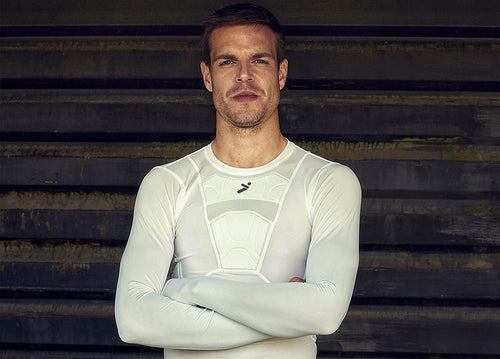
Confidence also stems from knowing your body is protected when making daring shots at the goal or dramatic defensive dives. Get maximum protection with Storelli's Bodyshield base layers.
Focus and Concentration
Focus is the ability to maintain attention on the task at hand. This means not being distracted by what is happening on the pitch or in other parts of your life. But, in soccer, it is also important not to let focus become tunnel vision. Good players need situational awareness to keep track of what teammates and opponents are doing to take advantage of critical opportunities. Top players develop the ability to "attention switch," which is rapidly shifting their focus between defense, transition, and attack. Focus drills that require quick decisions under time constraints can sharpen your reaction time and improve your ability to read the game.
Focus on your game rather than painful shin injuries with effective Shin Guard Sleeves to keep your guards in place throughout the game.
Resilience and Mental Toughness
Resilience is the ability to bounce back from setbacks. In soccer, mental endurance is just as important as physical stamina, as losing confidence will end your game as quickly as a cramp or fatigue. Effective training techniques for mental toughness include training through simulated adversity (such as bad referee calls), playing with fewer players than normal in a drill, or practicing in unfavorable weather conditions. The key is to learn how to transform mistakes and adversity into forward momentum and learning opportunities rather than letting setbacks drain your confidence and energy.
Feel tough mentally and physically with the right mental training techniques and the right Goalkeeper Jersey from Storelli.
Emotional Control
Emotional control goes hand-in-hand with mental toughness. Controlling your emotions is vital to avoid impulsive fouls or poor decision-making. Players must learn to recognize the physiological signs of emotional spikes, such as a racing heart or tense muscles, to self-manage. You can then learn quick reset techniques to restore your emotional balance and keep playing. By shifting your mindset, you can turn frustration into motivation, channeling negative energy into a productive performance.
Composure Under Pressure
Composure is the internal mental state you need to be in to play your best, executing techniques and observing the game with the level of precision that you train for. When you are calm, composed, and in the zone, you perform better when making penalty shots or last-minute defense maneuvers. Strategies, such as breathing techniques and positive self-talk, can help you slow down your perception of the game, even when adrenaline spikes.
Proven Techniques to Build Mental Skills in Soccer

Visualization
Visualization is a powerful mental tool. It's not just about outcome visualization; for example, seeing yourself score a goal. More useful for players is process visualization, which is mentally rehearsing the approach, the touch, and the shot. You can prepare these visualizations by going through a play mentally as if you are watching a game tape. Note all the details you focus on when you watch games back, creating vivid mental imagery. Integrating this into a pre-match warm-up can prime your mind and body for the game.
Added detail to your visualization by imagining yourself sliding in for that perfect goal, wearing a great pair of Soccer Sliding Shorts or making that dramatic save in a pair of Storelli Goalkeeper Leggings.
Positive Self-Talk
Positive self-talk is a proven method for neural rewiring: verbal reinforcement has been shown to help the brain take on new beliefs. This is essential for fostering a growth mindset that lets you believe that you can learn, evolve, and improve as a player. Using strong, specific self-talk phrases can boost performance. For example, a goalkeeper might say, "Stay big, watch the ball, make the save," while a midfielder might say, "Scan the field, find the open man, make the pass." The key is to replace reactive negative thoughts, such as "I'll never make that shot," with proactive affirmations that help you believe that you will.
Goalkeepers can further boost their confidence when making a save by pairing positive self-talk with a great set of Goalkeeper Gloves and Goalie Pants.
Mindfulness and Meditation
Mindfulness, which is focusing on where you are and what is happening in the moment, improves reaction time, composure, and recovery between plays. Simple "on-the-pitch" mindfulness moments, such as a few deep breaths during a dead-ball situation, can help you stay present and "in the zone." Many top athletes use a pre-game meditation ritual, such as breath work or visualization, to calm their nerves and center their focus.
Breath Control
The physiology of breathing directly affects the nervous system, which is why it is an essential factor in practices such as yoga and meditation. Controlled breathing can boost both endurance and decision-making by regulating heart rate and oxygen flow. Drills like box breathing, alternate nostril breathing, or brief breath-holding under light stress can train you to manage your physiological response to pressure.
Quiet Eye Training
Quiet eye training is a technique that focuses on a player's visual fixation. It teaches them to maintain a steady gaze on a specific spot for an extended period, which improves accuracy in passing, shooting, and defending. This is especially useful in game scenarios like corners, penalty kicks, or when receiving the ball under pressure.
Quiet eye training can be especially useful for goalkeepers, who need to keep track of the ball throughout the game. Check out Storelli's Soccer Goalie Equipment.
Integrating Mental Skills Into Daily Training

Mental training should be an embedded part of daily practice, not an optional add-on. You wouldn't miss passing drills, and you shouldn't miss mental drills. Coaches can make challenging mental drills more accessible by pairing physical drills with mental components, such as requiring players to make a specific decision during a sprint. Using competitive games in practice can simulate real pressure. A proper training plan will include periodization for mental skills, giving mental muscles the same opportunity to rest and recuperate as other muscle groups. This means balancing light, low-pressure days with high-pressure, mentally taxing days.
The Role of Technology in Mental Skills Training
Just as sports psychologists are increasingly discovering the importance of mental skills training, technology is revolutionizing the way we manage mental training. VR and AR simulations allow players to practice pattern recognition and acclimate to game speed in a controlled environment. Wearables can track focus and stress responses, providing objective data on a player's mental state. Additionally, mobile apps offer guided mental training and recovery programs.
Off-Field Habits That Boost Mental Performance
While mental skills training is essential on the pitch, players should adapt habits off the field that also boost mental performance. Nutrition that supports cognitive clarity is essential, as is sleep for optimal reaction times. Journaling can be a powerful tool for self-awareness and performance reflection, while building a mental recovery routine after intense matches helps prevent burnout.
The Coach’s Role in Developing Mental Skills
Coaches play a pivotal role in developing the mental skills of players. They must model and reinforce mental toughness through their own behavior, leading by example. It is also important to adopt communication styles that build confidence rather than break it down, as well as to develop both individual and team-level mental skills development plans. Coaches can measure progress using both objective and subjective tools, such as performance data and player feedback.
Common Pitfalls in Mental Skills Development
When embracing mental training, sports psychology has identified some common pitfalls to avoid. Players can fall into the trap of overtraining the mind without balancing recovery, leading to burnout. Using generic mental training instead of role-specific methods is another mistake, as it does not prepare you for the specific challenges that you will face on the pitch. There is also no one-size-fits-all approach, and techniques need to be tailored to the individual mental style of the player.
Conclusion — The Mind as the Ultimate Competitive Edge
In the end, mental skills shape not just a player's performance, but their entire career longevity. The future of soccer belongs to those who understand that the mind is the ultimate competitive edge. Players and coaches must integrate sport psychology techniques to develop mental skills into their regimen to remain competitive.
But don't forget, just as the right mindset protects performance, the right gear protects the body. Many competitive players trust Storelli.com for performance-ready protective equipment and training essentials.
FAQs
How to be mentally strong in soccer?
To be mentally strong in soccer, you need to develop core skills like confidence, focus, resilience, and emotional control. This involves practicing techniques such as visualization, positive self-talk, and mindfulness both on and off the field, and learning to manage pressure and setbacks effectively.
What are mental skills in sport?
Mental skills in sports are psychological skills and attributes that athletes use to enhance their performance. These include things like concentration, confidence, motivation, emotional regulation, and the ability to cope with pressure and adversity.
What are the mental benefits of playing soccer?
Playing soccer provides numerous mental benefits, including improved teamwork and social skills, enhanced problem-solving and decision-making abilities, increased discipline and resilience, and a boost in overall mood and mental well-being.
What motor skills are used in soccer?
Soccer requires a wide range of gross and fine motor skills. Gross motor skills include running, jumping, kicking, and tackling. Fine motor skills are used for precise movements like dribbling the ball, passing with accuracy, and controlling the ball with different parts of the foot.

